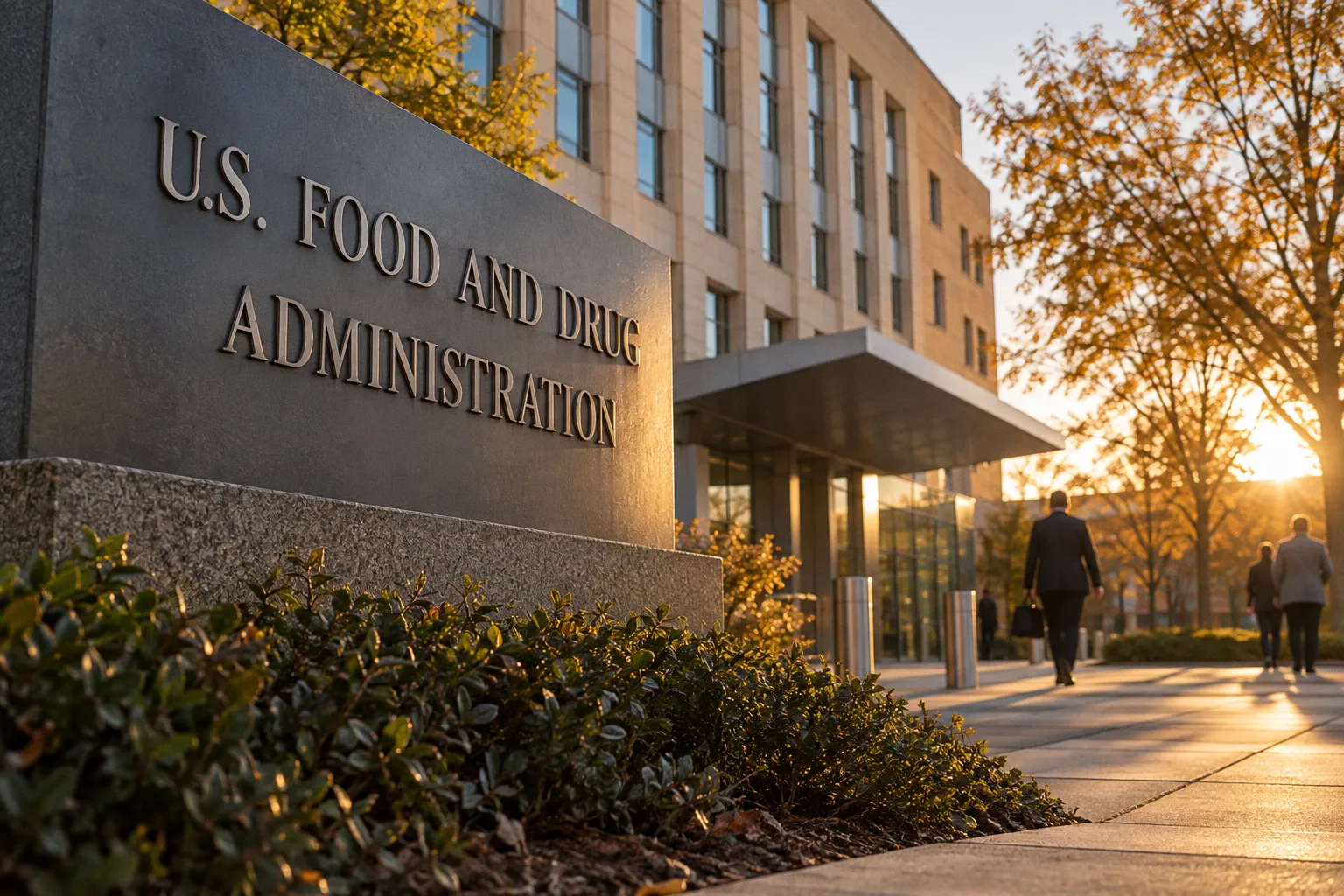
According to the U.S. Food and Drug Administration, AstraZeneca’s Etcamah has received accelerated approval for advanced breast cancer with a boxed warning on irregular heart rhythm when the drug is co-administered with specific medications. The labeling also includes precautions for severe bradycardia and embryo-fetal toxicity. For pharmacovigilance teams and oncology services, the approval is therefore not a routine access event; it is a controlled risk-management signal.
The boxed warning defines the primary exposure concern
The available information does not identify those medicines or provide a quantified incidence. That limitation is material. No risk estimate, interaction threshold, or patient subgroup can be inferred from the available evidence.
The safety label also includes precautions for severe bradycardia. This places cardiac monitoring and medication reconciliation within the practical control points for any treatment decision. The available evidence does not specify a monitoring schedule, eligibility criteria, or required intervention pathway. Those elements must therefore be verified in the current prescribing information and applicable institutional protocols rather than assumed from the approval announcement.
The embryo-fetal toxicity precaution creates a separate documentation requirement for treatment workflows involving patients who could become pregnant. The evidence does not provide further detail on testing, contraception, or treatment restrictions. Those conditions should not be reconstructed from the announcement.
What clinical documentation should establish
The minimum review sequence is defined by the risks named in the FDA communication:
1. Confirm that the proposed use concerns advanced breast cancer and that the treatment decision is based on the current Etcamah labeling.
2. Identify all concomitant medications before administration, with specific attention to the interaction described in the boxed warning.
3. Assess how the service will detect and manage severe bradycardia within its existing clinical workflow.
4. Verify the documentation required for embryo-fetal toxicity precautions.
This is not a substitute for the full label. It is a control framework derived from the limited facts available. The critical variance is the absence of named interacting medicines and quantitative risk data in the source material. Without those details, a clinic cannot establish a complete risk threshold from the announcement alone.
Accelerated approval increases the need for label control
The FDA’s action is an accelerated approval, but the available evidence does not state the basis for that designation, post-approval obligations, confirmatory evidence, or any timeline for further regulatory review. Those matters should not be inferred.
A separate Benzinga item refers to safety liabilities identified by a Pyxis Oncology analyst, but the supplied material contains no substantive analysis or additional verified clinical detail. It cannot support a broader conclusion about Etcamah’s risk profile.
The definitive pharmacovigilance assessment is therefore narrow: Etcamah now carries an FDA-recognized boxed warning for irregular heart rhythm in the presence of specific co-administered medications, alongside precautions for severe bradycardia and embryo-fetal toxicity. Until the complete labeling is reviewed, medication interaction screening and documentation remain the principal mitigation controls.